

The misunderstanding of Rumi
Today, more than ever, there are significant flaws in the ways Rumi’s words are received and conveyed. (more…)
An authentic, first-hand access
to Rumi’s Timeless Message
by a native Persian scholar …
?
Jalal al-Din Muhammad Rumi (1207–1273), widely known simply as Rumi, was a Persian poet, Islamic scholar, and Sufi mystic whose influence transcends borders, cultures, and religions. Born in present-day Afghanistan and later living in Konya (modern-day Turkey), Rumi’s writings reflect a deep spiritual legacy rooted in the traditions of Islamic mysticism, yet they speak to universal human experiences- love, suffering, longing, selfhood, and the search for truth.
Rumi’s major work, the Masnavi-ye Ma’navi (Spiritual Couplets), is a six-volume poetic masterpiece often regarded as the Persian-language equivalent of a scripture for seekers of truth. His other celebrated writings include the Divan-e Shams-e Tabrizi, a collection of ecstatic poems dedicated to his spiritual companion, Shams of Tabriz. It was this intense friendship that transformed Rumi from a conventional religious scholar into a passionate mystic and poet.
Rumi’s language is symbolic, metaphorical, and often richly layered. He uses stories, parables, and lyrical imagery to explore profound truths about the nature of the self, the soul’s longing for union with the divine, and the illusions of ego. His poetry does not preach a particular dogma; rather, it invites readers into an inner journey of self-discovery and spiritual awakening.
In recent decades, Rumi’s works have gained global popularity, translated into many languages and embraced by people of various spiritual backgrounds. However, many of these translations—especially those by non-Persian speakers—tend to strip away essential philosophical, cultural, and mystical layers of meaning. As a native Persian speaker and scholar of Rumi, I seek to present a more accurate and in-depth understanding of his words, drawing directly from the original texts.
Rumi is not merely a poet of love, as he is often simplified in the West. He is a philosopher, a sage, and a guide—offering a path not only to spiritual enlightenment but also to psychological insight and human flourishing. His legacy continues to resonate because it speaks to the deepest needs of the soul: to love, to know, and to be.
Rumi’s spiritual worldview is rooted in Sufism, which is the Islamic form of mysticism. Understanding mysticism—and Sufism in particular—is essential to truly grasping the meaning behind his works.

Mysticism refers to the inner path of spiritual experience—a direct, intimate encounter with the divine or ultimate reality that transcends rational thought, external rituals, or religious formalities. It is the heart of many religious and spiritual traditions across the world, including Christianity, Judaism, Islam, Buddhism, and Hinduism. Mystics throughout history have sought more than belief or doctrine; they have yearned for union, communion, or absorption in what they perceive as the sacred or infinite.
At its core, mysticism is experiential. It does not aim to prove God’s existence or argue metaphysical positions. Rather, it is the transformative journey of the soul toward the Real—toward truth, love, and wholeness. Mystics often describe this process in poetic or symbolic language, as the experiences themselves are difficult, if not impossible, to fully express in logical or scientific terms.
In mysticism, the ego—the separate sense of self—is seen as a barrier to spiritual insight. The mystic’s goal is often to transcend or dissolve this ego-bound identity, allowing a deeper, more authentic self to emerge—one that is connected to the whole of existence. This journey involves inner purification, deep contemplation, humility, love, and often a profound sense of awe and surrender.
Mysticism also challenges the dualisms that dominate ordinary thinking: self and other, God and world, good and bad. In the mystical view, these are often seen as temporary illusions or fragmented perceptions. The mystic seeks a unity behind appearances—a sacred oneness that underlies all diversity.
Rumi was a mystic in the truest sense. His poetry is not merely devotional or philosophical—it is the record of a soul’s encounter with the Divine, marked by longing, ecstasy, and transformation. When Rumi speaks of love, he is not speaking of emotion alone, but of a force that dissolves boundaries and opens the door to truth.
His mysticism, however, is not abstract or universal in the modern sense- it is expressed through the lens of Sufism, the mystical tradition within Islam. Sufism is to Islam what mysticism is to religion in general: its spiritual heart. Thus, Sufism is the specific form of mysticism that shaped Rumi’s path and poetry.
?
Sufism, or Tasawwuf, is the mystical tradition within Islam that emphasises the inward path to God. While Islam as a religion provides the external framework—prayer, fasting, pilgrimage—Sufism focuses on the inner dimension: love, purification of the heart, spiritual discipline, and direct experience of the Divine. Often described as “the heart of Islam,” Sufism seeks not merely to follow the rules of religion, but to live in a state of constant remembrance and nearness to God.
Sufis regard the ego (nafs) as the main veil between the individual and the Divine. Their path involves gradual purification of the self from pride, greed, anger, and other traits that cloud the soul. This journey requires guidance, and traditionally, Sufis train under the mentorship of a spiritual teacher (sheikh or pir), often within an order or brotherhood (tariqa). Through practices such as dhikr (remembrance of God), sama (listening to music or poetry), meditation, and service to others, the seeker moves toward deeper states of awareness and love.
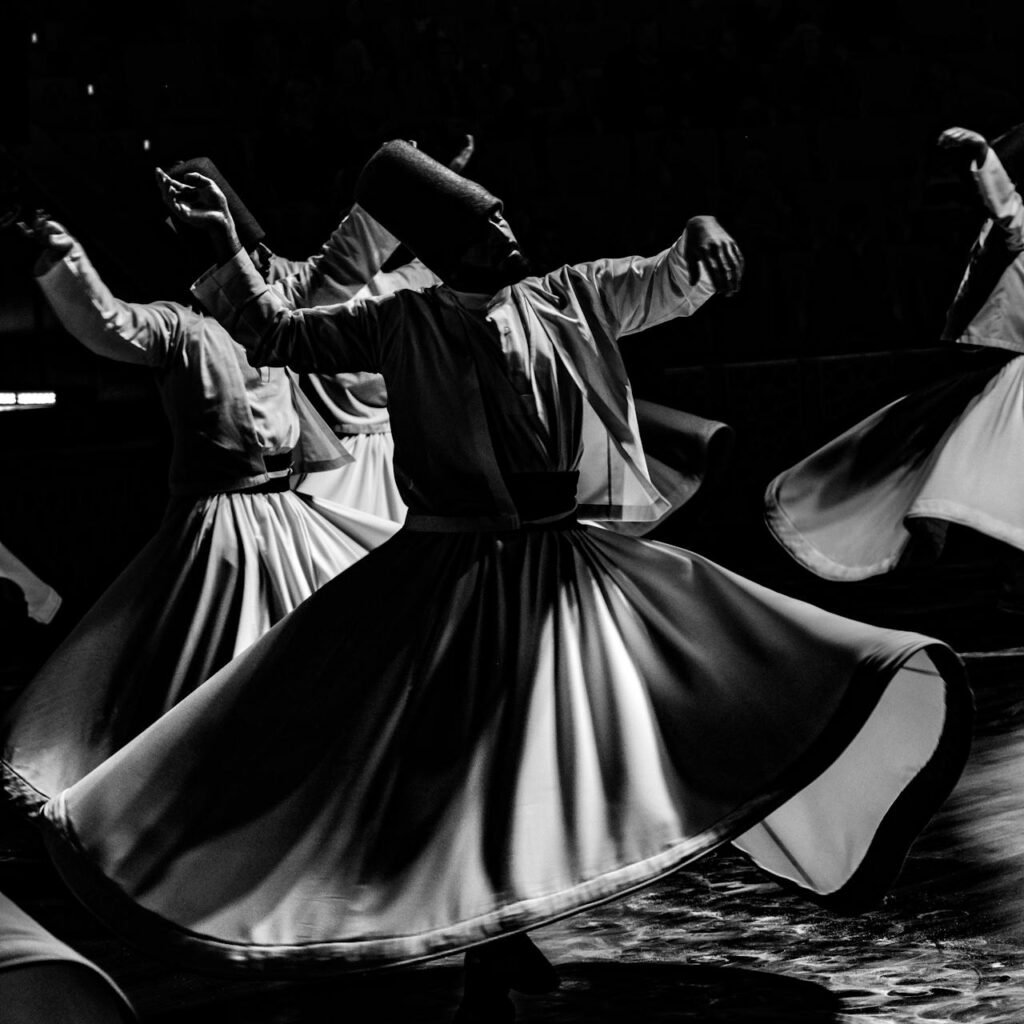
Sufism is deeply poetic, and its practitioners often use music, dance, and verse as spiritual tools. The Whirling Dervishes of the Mevlevi order—founded in honour of Rumi—are a well-known example of Sufi practice, where the spinning dance symbolises the soul’s journey toward union with the Divine.
While Sufism is rooted in Islamic theology and ethics, its universal message has allowed it to reach hearts far beyond Muslim communities. Sufi teachings emphasise love, humility, tolerance, and the essential unity of all beings. This inclusivity has made it both influential and, at times, controversial within different Islamic contexts.
Rumi is one of the most prominent voices in the Sufi tradition. His writings capture the essence of Sufi thought and practice—describing the human condition as one of exile and longing, and the Divine as the true Beloved to whom we all must return. His words transcend religious labels, yet they are deeply rooted in Sufi cosmology, metaphysics, and ethical practice.
As the mystical expression of Islam, Sufism is part of the larger family of global mysticism. Understanding its place within that broader tradition helps readers connect Rumi not only to Islam, but also to a universal lineage of mystical seekers across cultures and faiths.

about Rumi
(An Introduction to the Works, Thought and Teachings of Jalaluddin Rumi)
Who was Rumi? What was his perspective on religion, the world, and life? What does he mean by “Die before you die”? What is his stance on reason, and why does he call the intellect a “wooden leg”? Does Rumi suggest that we must abandon reason and thought to attain happiness? What does “subsistence through annihilation” mean in Sufism, including Rumi’s philosophy? And how can we unlock the meanings of Rumi’s mystical language?
In this rare and enlightening introduction to Rumi’s life and work, we pick up and turn the pages of his poetry, listen to the wisdom of this world-known spiritual teacher, and see the world through his eyes. Through the Eyes of Rumi presents a well-documented and in-depth exploration of his worldview, drawn from his own words and authentic sources.
Divided into five chapters, the book covers:
This book offers an accessible yet deeply insightful journey into Rumi’s philosophical and mystical thought. It is an indispensable work for those seeking an accurate and profound understanding of who Rumi is and what he teaches.
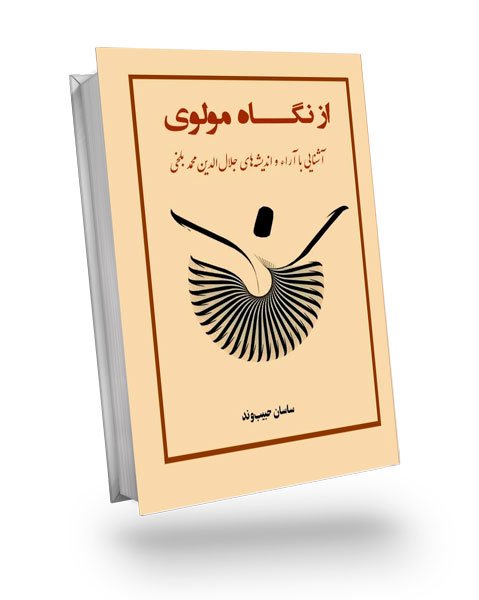
The English Version is Coming Soon
UNVEILED (Blog)






Silence the clamour within,
And the secrets will reveal themselves.
Rumi – Poet
about



To reserve me and know if the needed date is free write me to WhatsApp/Telegram or call me.