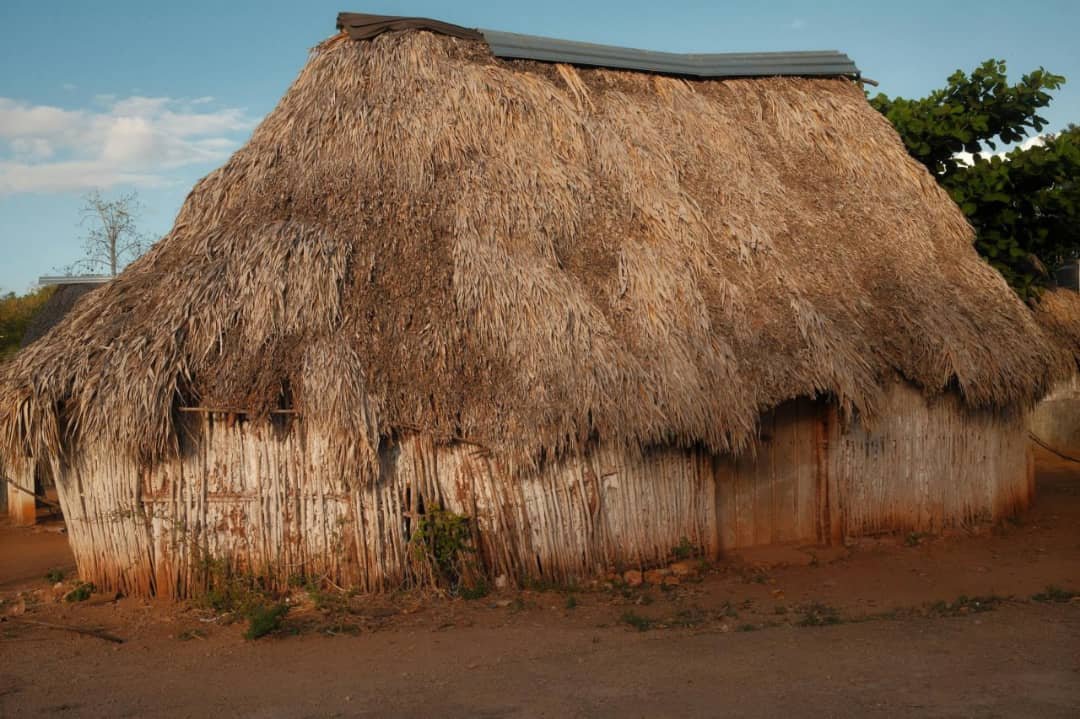

In forested and humid areas, various plants and creatures—such as weeds, insects, and rodents—grow around and even on the roofs of houses, building nests and taking shelter. Some of these beings are poisonous or dangerous; others damage buildings or spread disease. Like many others, our house too is cleaned and treated annually by pest control specialists using poisons and traps.
Lately, I’ve been thinking about these poor creatures we kill. What fault do they really have? They don’t know that their presence or behaviour might harm or disturb us. They simply live and act in the way nature has programmed them—lives over which they have no choice or control. To destroy a living being, innocent and unaware, for simply following its natural course of life—that’s clearly an act of injustice.
I ask myself: By what right do we destroy them? Why do we commit injustice for the sake of our own survival? Even the labels we use—“weed” or “pest”—are blatantly self-centered. These plants and animals are weeds and pests only from our perspective, because they interfere with our needs. But in their own world, they are neither invasive nor harmful—
that tiny baby mouse, for example, is the most beloved creature in the world to its parents. And even if they do disturb us, it’s never intentional.
We humans, on the other hand, knowingly and deliberately cause massive disruption to other species—and often with full awareness. But there is a more important point here.
If you zoom the lens of your perspective all the way out—if you look at the universe from above—you’ll see that in this world, it seems impossible to completely avoid injustice.
Violence and domination appear to be an inseparable part of how the world functions.
In recent years, there’s been a rising global movement against meat consumption and animal killing. Many have embraced vegetarianism. I, too, believe this is a beautiful and humane shift—but the issue runs deeper than dietary choices.
At every moment, our life depends on the death of countless other living beings—and theirs on others still. We pull weeds from the ground, we consume vegetables, we wash our hands—killing thousands of microscopic creatures each time. Even our natural bodily functions—like digestion and immune response—require the destruction of countless microorganisms, all of which are alive and have a right to exist.
Life and death are inseparably woven into the very cycle of existence. All beings, willingly or not, become victims of one another’s survival.
Even the way nature has designed us—gradually weakening our bodies with age and leading us toward death—reveals the overarching plan: some must die so that others may come into being.
This reality presents a serious philosophical challenge for someone like me, who sees flourishing as the standard of right action, and injustice as the hallmark of wrong.
If injustice cannot be fully eliminated, then perhaps we cannot create absolute or permanent moral laws. Perhaps ethics must be understood as a flexible and evolving process, aimed at minimising suffering and supporting flourishing, with broad principles that must be interpreted and adapted according to circumstance.
Whatever the case, one thing is clear: in a world already filled with so much unintentional suffering, we must do our utmost to avoid causing deliberate harm.
In fact, the existence of unavoidable suffering makes compassion and kindness all the more essential.